
Hotel housekeeping staff clean guest rooms and common areas so the property stays sanitary and ready for new arrivals.
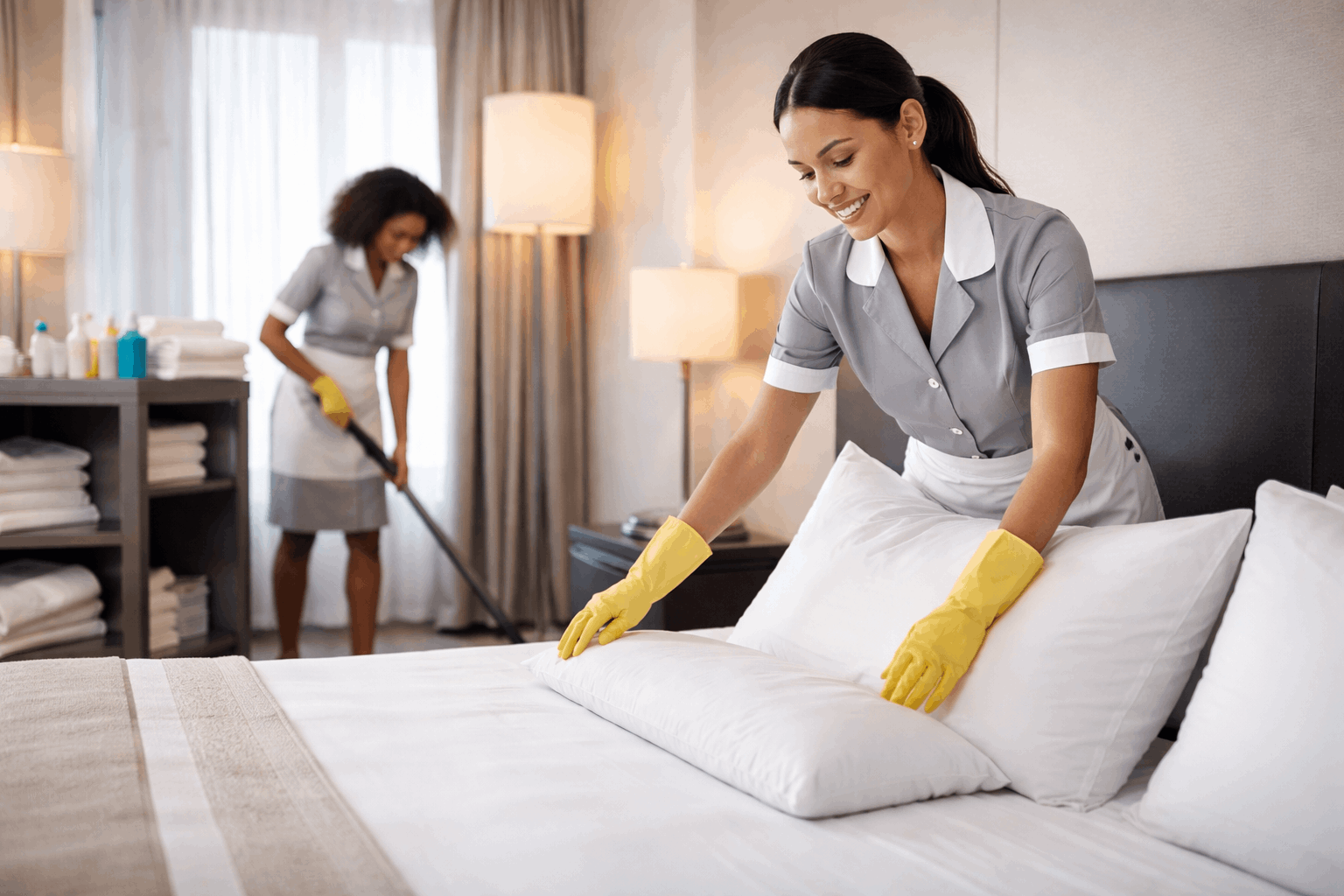
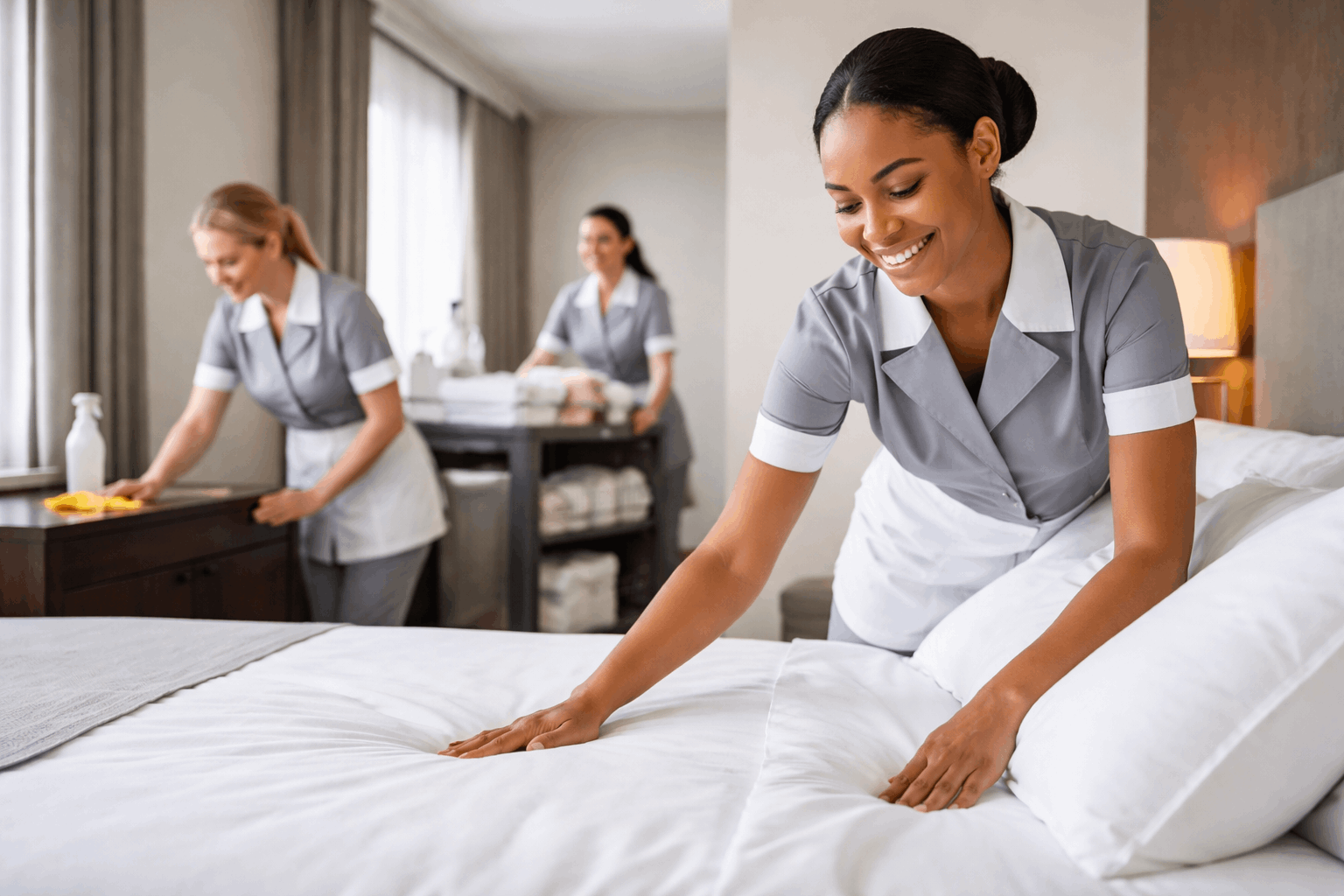
Typical tasks include making beds, replacing linens, vacuuming, dusting, restocking supplies, and cleaning bathrooms to a consistent standard.



Many roles also involve working from a room list, following property procedures, and coordinating with supervisors when rooms need extra attention.
Requirements Hotels Commonly Expect
Most housekeeping roles do not require a college degree, but they do require reliability, punctuality, and the ability to follow instructions consistently.
Because housekeeping is time-sensitive, hotels often look for workers who can keep pace while still meeting quality and cleanliness expectations.
Clear communication matters because room status updates, lost-and-found handling, and maintenance notes depend on accurate reporting.
Language expectations vary by location, but the ability to understand safety rules, labels, and cleaning steps is usually essential.
Education, Experience, and Training
Many hotels hire entry-level candidates and teach room routines, chemical handling basics, and property-specific standards during onboarding.
Prior cleaning experience can help, but it is often treated as a plus rather than a strict requirement for room attendant roles.
Ongoing training may cover safety, hygiene, and service consistency, especially in larger properties with formal programs.
Background Checks and Workplace Rules
Some hotels run background checks because staff may enter private guest spaces and handle found valuables, but requirements vary by employer and local law.
Work rules often include identity and work authorization verification, since hotels must follow applicable employment laws in their country or region.
Policies commonly cover privacy, key control, and guest interaction standards, because housekeeping work happens in active guest areas.
Skills That Help You Succeed
Attention to detail helps workers spot missed dust, stained linens, or supply gaps before a room is marked ready.
Time management is important because schedules can involve multiple rooms with different checkout times and priorities.
Professional behavior matters because the job can include brief guest contact and teamwork with front desk and maintenance.
Physical Demands and Safety Expectations
Hotel housekeeping is physically demanding because workers spend most of the day on their feet while moving between rooms and tasks.
The job often involves bending, reaching, lifting, pushing carts, and working in tight spaces like bathrooms and hallways.
Because the work can be repetitive, hotels may emphasize safe movement, proper tool use, and paced routines to reduce strain.
Knowing how to use cleaning products safely is essential, since many products have label instructions and exposure precautions.
Standing, Bending, and Low Postures
BLS survey data shows housekeeping workers spend most of the workday standing rather than sitting.
The same dataset indicates low postures are commonly required for the occupation, which fits tasks like bathroom cleaning and making beds.
These demands are a big reason hotels may focus on safe techniques and smart workflows during training.
Chemical and Equipment Safety
Housekeeping work can involve disinfectants, detergents, and solvents, so following label directions and hotel rules helps prevent irritation or injury.
Equipment like vacuums and carts adds pushing and pulling forces, which is why many properties include safety guidance in their procedures.
When rules are followed, safety practices support both worker well-being and consistent room quality across the property.
Pay: What Housekeepers Earn and What Affects It
Pay varies widely by country, city, hotel type, and employer policies, so job posts can differ even within the same region.
In the United States, a reliable benchmark is the BLS wage data for “maids and housekeeping cleaners,” which covers many hotel housekeeping roles.
BLS national estimates show wages across percentiles, meaning beginners and highly experienced workers can fall into very different pay ranges.
Some hotels pay hourly, while others may add incentives for productivity or attendance, but the base hourly wage is usually the main component.
U.S. National Wage Benchmarks (BLS)
BLS national data for May 2024 lists a mean hourly wage of $17.39 for maids and housekeeping cleaners.
The same table lists a median hourly wage of $16.66 and a mean annual wage of $36,180 for the occupation.
These figures are national averages and do not predict what one specific hotel will offer in a particular city.
Why Pay Can Differ by Hotel and Location
Hotels in higher-cost areas may offer higher wages, while smaller markets may offer less, which is why comparing local postings is important.
Pay may also change by property type, such as limited-service versus full-service, because room size, amenities, and staffing models can affect workload.
Experience, speed, and quality can influence scheduling and preferred shifts, which can indirectly affect weekly earnings even when the hourly rate stays the same.
Tips, Service Charges, and Incentives
In many hotels, housekeeping is not a tipped role in the same way as restaurant service, but practices vary by property and region.
Some workplaces use bonuses or attendance incentives, while others rely only on hourly pay, so the offer letter matters more than assumptions.
If you see “per room” pay or productivity pay, ask how quality checks work and whether the hotel guarantees a minimum hourly equivalent.
Schedules, Workload, and Working Conditions
Housekeeping schedules often follow hotel occupancy patterns, so weekends, holidays, and peak travel seasons can be common work times.
Workloads may be measured in rooms per shift, with heavier assignments during high occupancy and lighter assignments during slower periods.
Team structure varies, but many hotels rely on supervisors who inspect rooms and coordinate re-cleans or priority requests.
Because the work is essential to hotel operations, dependable workers may get steadier hours and stronger references over time.
How to Get Hired and Build a Long-Term Path
A strong application focuses on reliability, attention to detail, and any experience with cleaning routines, hospitality, or fast-paced work.
Many employers value clear availability, since hotel staffing needs can change with occupancy and event schedules.
Showing you can follow checklists and safety rules helps because housekeeping requires consistent procedures across many rooms.
With experience, some workers move into trainer, inspector, or supervisor roles, which can come with higher pay and more responsibility.
Application and Interview Tips
Use short bullet-style achievements in your resume, like “cleaned guest rooms,” “followed checklists,” or “restocked supplies,” because the job is task-driven.
In interviews, mention how you stay organized under time pressure and how you handle quality checks without cutting corners.
If you have no experience, emphasize consistency, willingness to learn, and comfort with physical work, because those traits match the role’s daily reality.
Growth Opportunities in Housekeeping
Some hotels promote reliable staff into lead roles that help assign rooms, support new hires, and coordinate with the front desk during rush periods.
Supervisory and inspector roles can require stronger communication skills and comfort with coaching, since quality standards must be enforced fairly.
If you want advancement, ask about training options and internal pathways, because properties that invest in development often post openings internally first.
Key Takeaway
Hotel housekeeping work centers on consistent cleaning, room readiness, and professional routines supported by safety standards.
If you are considering this path, compare local postings carefully and apply to hotels that match your schedule needs and growth goals.