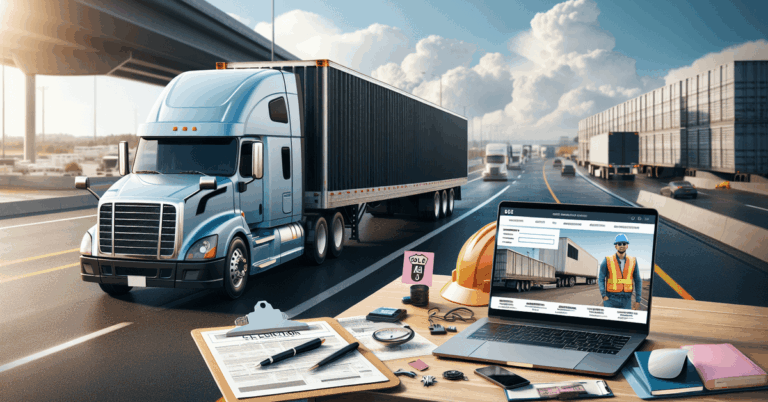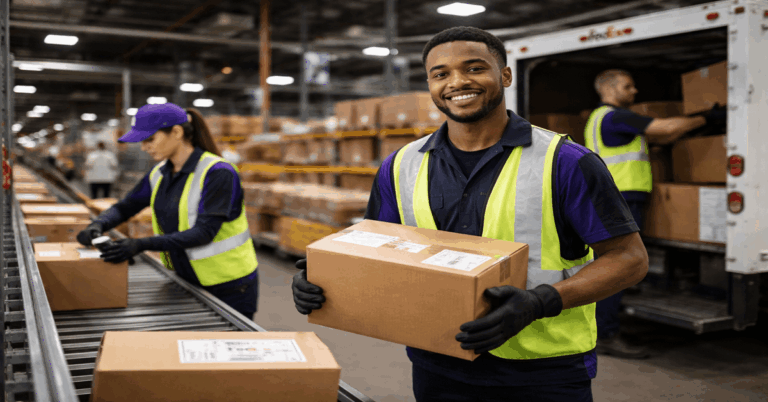
Starting work as a warehouse forklift operator is a practical path into logistics, but it’s also a safety-critical job.
In many workplaces, employers must ensure operators are trained, evaluated, and certified under the applicable safety rules for powered industrial trucks.



Understand what warehouse forklift operators actually do
Forklift operators move materials through warehouses by loading, unloading, stacking, and transporting pallets to keep orders flowing on schedule.
Many roles include routine equipment checks, documenting what was moved, and coordinating with pickers, receivers, and dock teams.
The work environment usually includes shared traffic lanes, blind corners, loading docks, and pedestrian areas.
Job titles vary, so listings may say forklift operator, lift truck operator, or industrial truck and tractor operator, even when the work is similar.
Know the baseline requirements before you apply
Most employers expect you to meet legal working-age rules and to be able to safely perform material-handling tasks for long shifts.
In the USA, forklift operation falls under OSHA’s powered industrial truck standard, and employers must ensure that only trained and competent operators drive.
Even when a training provider issues a completion card, OSHA places the responsibility on the employer to train, evaluate, and certify operators for their workplace conditions.
If you’re outside the U.S., the same “trained, assessed, and site-specific” concept usually applies.
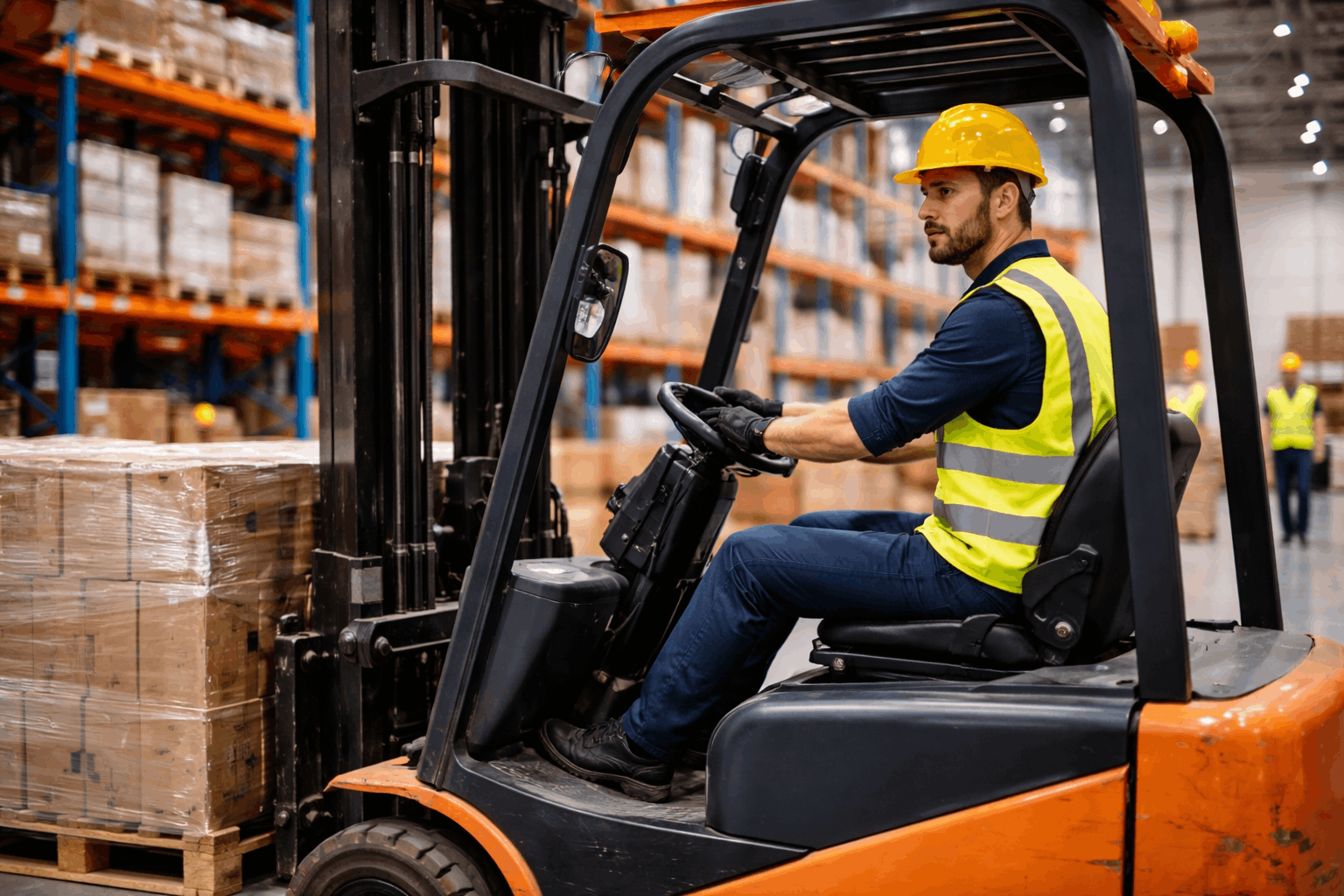
Get trained the right way, not just “shown the controls.”
Forklift training is typically a blend of formal instruction plus hands-on practice, followed by an on-the-job evaluation of your real driving performance.
You should expect training to cover truck operating principles, workplace hazards, and the rules that apply to the powered industrial truck you’ll use.
Employers must certify that each operator has been trained and evaluated, and the certification must include specific details like names and dates.
Choose training that emphasizes stability, pedestrian awareness, and dock safety, because those are common risk areas in warehouses.
What OSHA-style training usually includes
OSHA’s rule describes training topics and requires a structured approach that addresses both the truck type and the workplace conditions.
Training commonly includes formal instruction, practical training (demonstrations and exercises), and an evaluation in the workplace.
The goal is competence, meaning you can operate safely with your loads, aisles, ramps, and traffic patterns, not just drive in an empty lot.
Refresher training and the 3-year performance evaluation rule
OSHA requires an evaluation of each operator’s performance at least once every three years.
Refresher training is also required when certain triggers happen.
This matters for your career because it means you should keep your skills sharp and be ready to demonstrate safe driving.
What your employer’s certification record must show
OSHA says the employer’s certification must include your name, the training date, and the evaluation date.
If you change jobs, your new employer may accept relevant prior training only if it matches their truck and conditions, and you’re evaluated.
Practically, you should keep copies of any training documentation you receive so you can speed up onboarding discussions with future employers.
Build the safety habits that keep you employable
NIOSH stresses that preventing forklift incidents requires a safe environment, a safe forklift, comprehensive training, and safe work practices.
That means your daily routine should focus on visibility, separation from pedestrians, stable load handling, and disciplined speed and turning behavior.
OSHA’s forklift guidance highlights basics like keeping clear visibility, using horns where needed, watching for pedestrians, and never lifting people on forks.
When you’re consistent with safe habits, you protect coworkers, protect product, and make yourself easier to trust with better shifts.
Pre-shift inspection and safe setup
A typical operator workflow includes setting up and inspecting equipment before moving loads, not just hopping on and driving.
OSHA’s guidance emphasizes staying aware of the work area, clearance, ramps, and platform edges, which starts with checking conditions.
If something feels off, you pause and report it, because “pushing through” is how incidents happen.
Load handling, stability, and tip-over awareness
Forklift stability depends on the combined center of gravity staying within the truck’s stability limits, and raising the center of gravity generally reduces stability.
You protect stability by handling loads within rated capacity, keeping loads controlled, and avoiding sharp turns or fast moves that shift the center of gravity.
Because tip-overs and falls from docks are serious hazards, many safety programs prioritize careful driving on ramps and near edges.
Pedestrian safety and traffic flow in real warehouses
NIOSH points to traffic management as a key prevention measure because forklifts and pedestrians often share space in busy warehouses.
OSHA’s forklift guidance calls out using horns at cross-aisles or obstructed areas and staying alert for pedestrians as a core behavior.
If your warehouse uses marked walkways and crossing rules, follow them exactly, because predictable behavior is what keeps high-traffic areas safe.
Learn the skills employers screen for in interviews and tests
Employers often look for operators who can follow processes, communicate clearly, and stay calm under time pressure while still prioritizing safety.
Warehouses may expect you to coordinate moves with a plan or schedule and keep records of what you moved and where it went.
You may also be expected to signal and direct others during loading and unloading, which requires attention and teamwork.
If you can explain your approach to safety, inspections, and pedestrian awareness in simple terms, you usually stand out as “ready for the floor.”
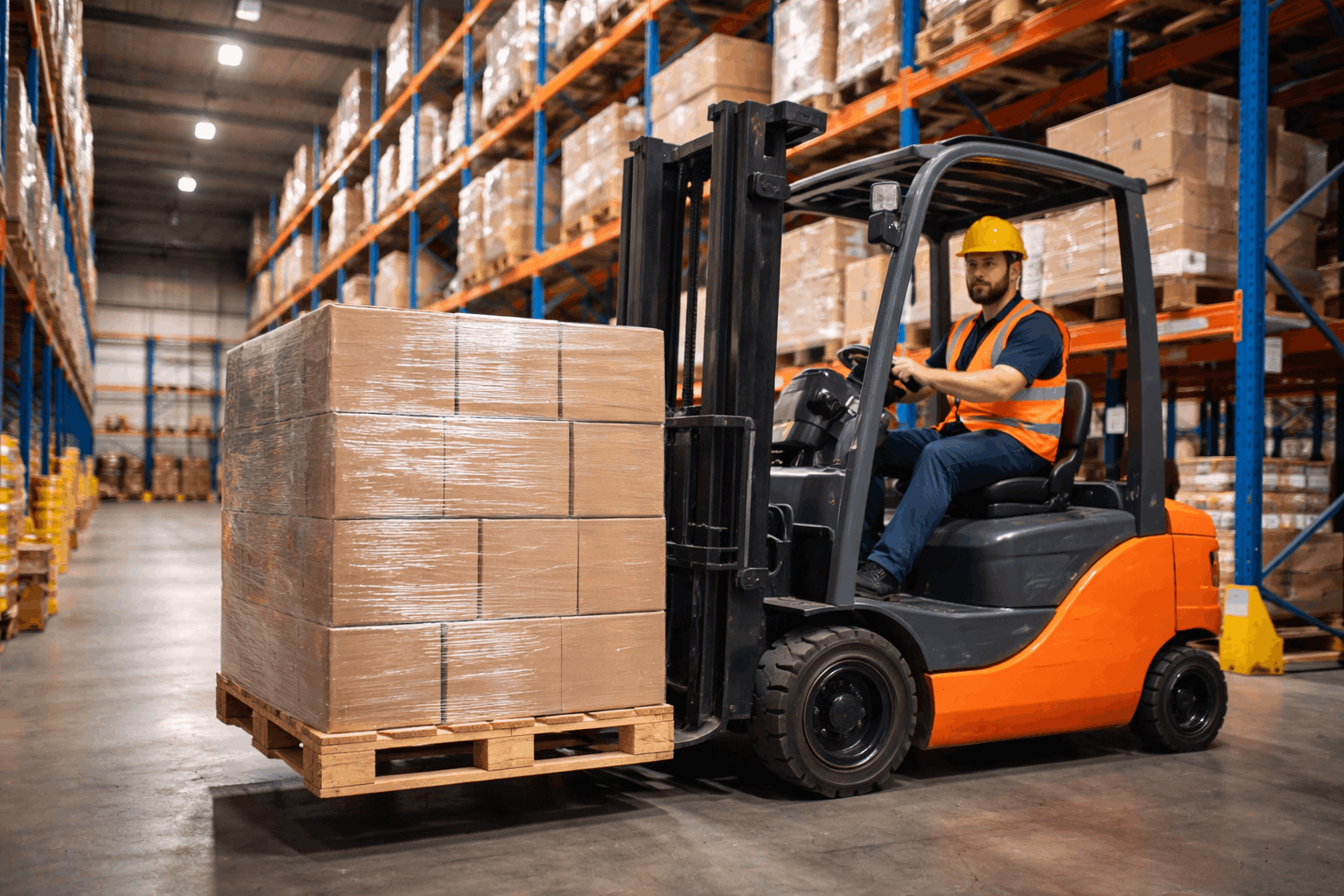
Find entry points, apply smart, and be ready to prove competence
Start by targeting warehouses, distribution centers, cold storage, and manufacturing sites that regularly hire material-moving operators.
When you apply, make it easy to see your shift availability and any powered industrial truck training you’ve completed.
Expect pre-hire screening to include a safety mindset check and, often, a practical evaluation to demonstrate competence.
If you get hired, treat the first weeks as “proof time” by asking questions, learning the traffic plan, and following the facility’s exact safe-work rules.
Pay expectations and growth paths in warehousing
In the U.S., BLS data for industrial truck and tractor operators shows a national median wage of around $21.38 per hour (about $44,470 annually).
In the warehousing and storage industry specifically, the BLS shows a median of around $23.03 per hour (about $47,900 annually).
Job outlook depends on region and local logistics demand, but large numbers of openings can come from turnover.
Conclusion
Starting as a warehouse forklift operator is a realistic way to enter logistics if you take training, evaluation, and daily safety habits seriously.
Focus on learning your site’s traffic rules, doing consistent pre-shift checks, and handling loads with stability in mind.